
The Old Post Office on Dock Road: Infrastructure and Afterlife in Barrytown, New York
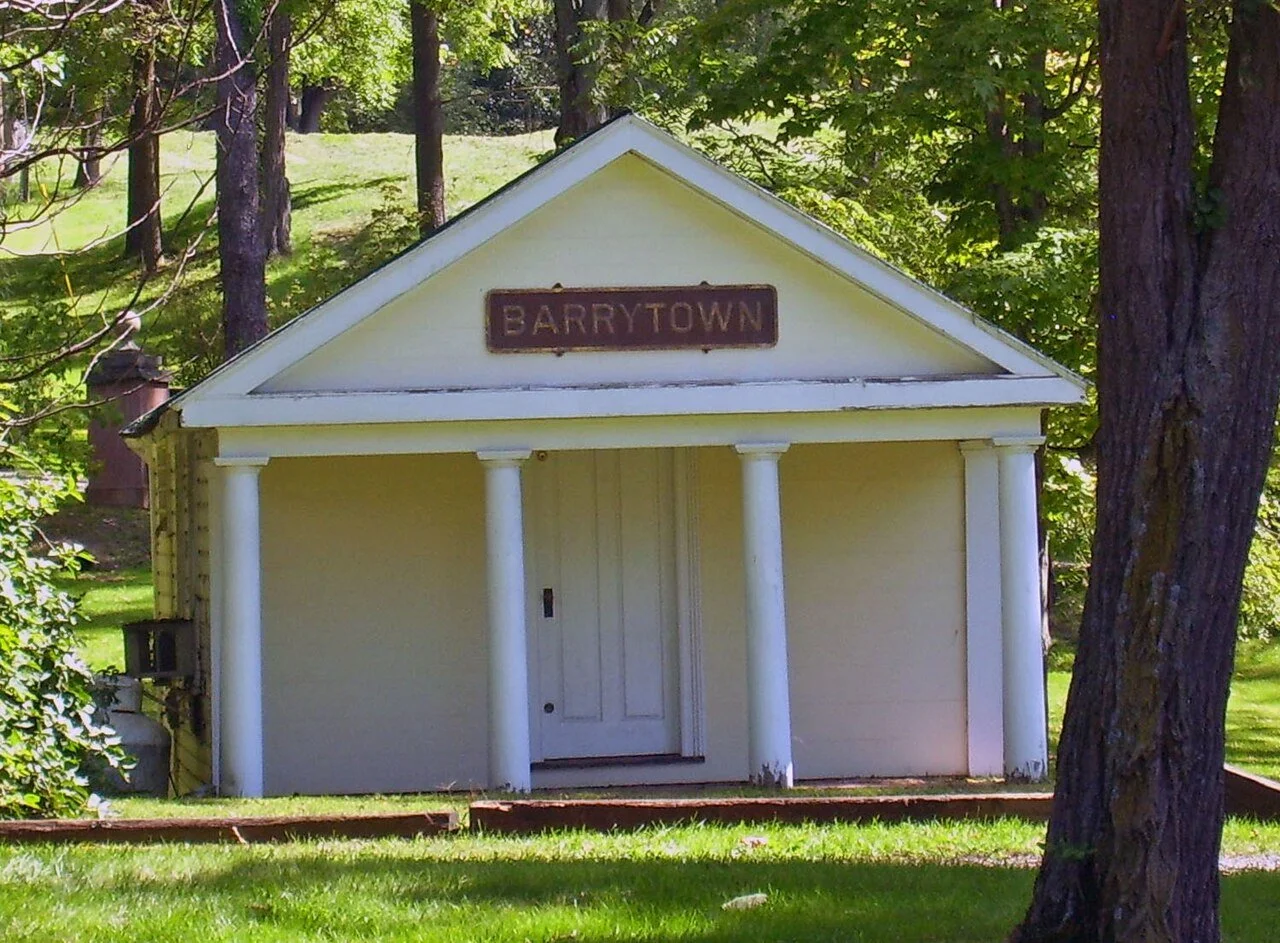
As it stands today, the Barrytown Post Office, which overlooks the Hudson River, echoes the importance of rural post offices, not just as mail facilities but as vital community hubs.
Daniel Case photographer via Wikimedia Commons, CC BY-SA 3.0
The old Barrytown Post Office on Dock Road, within a stone’s throw of the Hudson River, is easy to overlook among houses and trees that now define the hamlet’s quiet edge. It belongs to a category of architecture that some call vernacular, but most would agree is quiet, handsome, and obviously once important to a long-gone community. Rural post offices like these quietly organized the geography of 19th-century America, translating national systems of communication into local centers of community and news along the valley.
It was once the center of Barrytown, which emerged from the logic of the river—first known as Lower Red Hook Landing. The settlement developed in the Federal period as an agricultural shipping point where farms met navigable water. Barges, sloops, and later rail connections tied the landing to regional markets, positioning it within the expanding economic network of the Hudson Valley. When the community adopted the name “Barrytown” in 1830, honoring U.S. Postmaster General William Taylor Barry, the message was simple: this community’s identity was no longer defined solely by trade but by connection, centered on a modest building.
Postal infrastructure functioned as a spatial declaration that a place existed within a national framework. Mail routes imposed rhythm and reliability onto dispersed rural landscapes, linking farms, estates, and river industries to distant administrative and commercial centers. In towns like Barrytown, the post office was less a monument than a node—modest in form but expansive in consequence.
For much of its history, that node was inseparable from the Martin family, whose stewardship of the Barrytown Post Office extended across generations. Like many rural postal operations of the 19th and early 20th centuries, the facility functioned not as a detached federal installation but as a family enterprise embedded within domestic life. Successive Martins served as postmasters and caretakers, operating the office from a building that blurred distinctions between home, workplace, and civic institution. Mail sorting occurred alongside everyday household routines, reinforcing how federal systems relied upon local trust and continuity rather than bureaucratic distance. The longevity of the Martin family’s involvement gave Barrytown an unusual degree of institutional stability: residents retrieved letters and newspapers from familiar hands, often across decades, binding personal memory to national infrastructure.
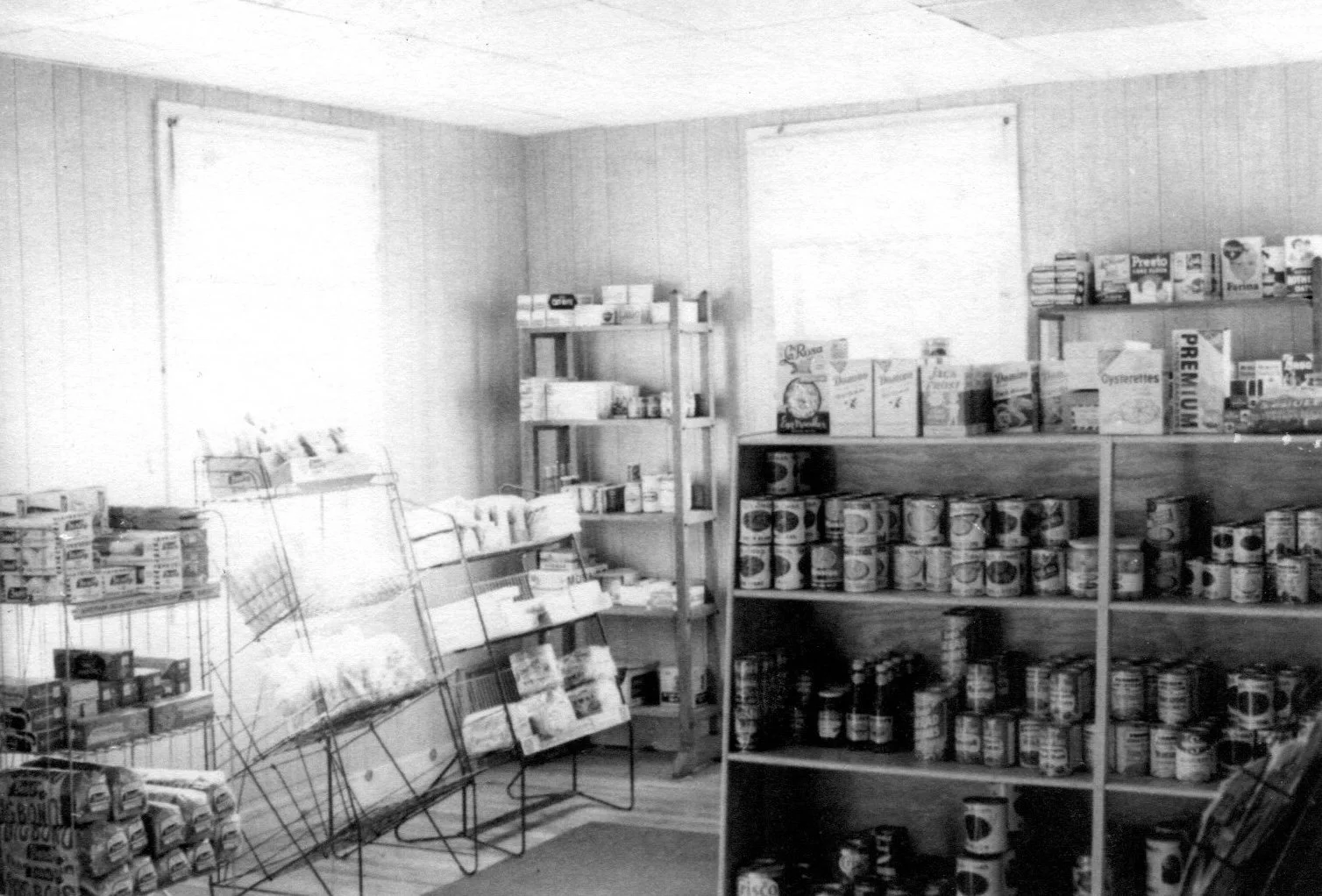
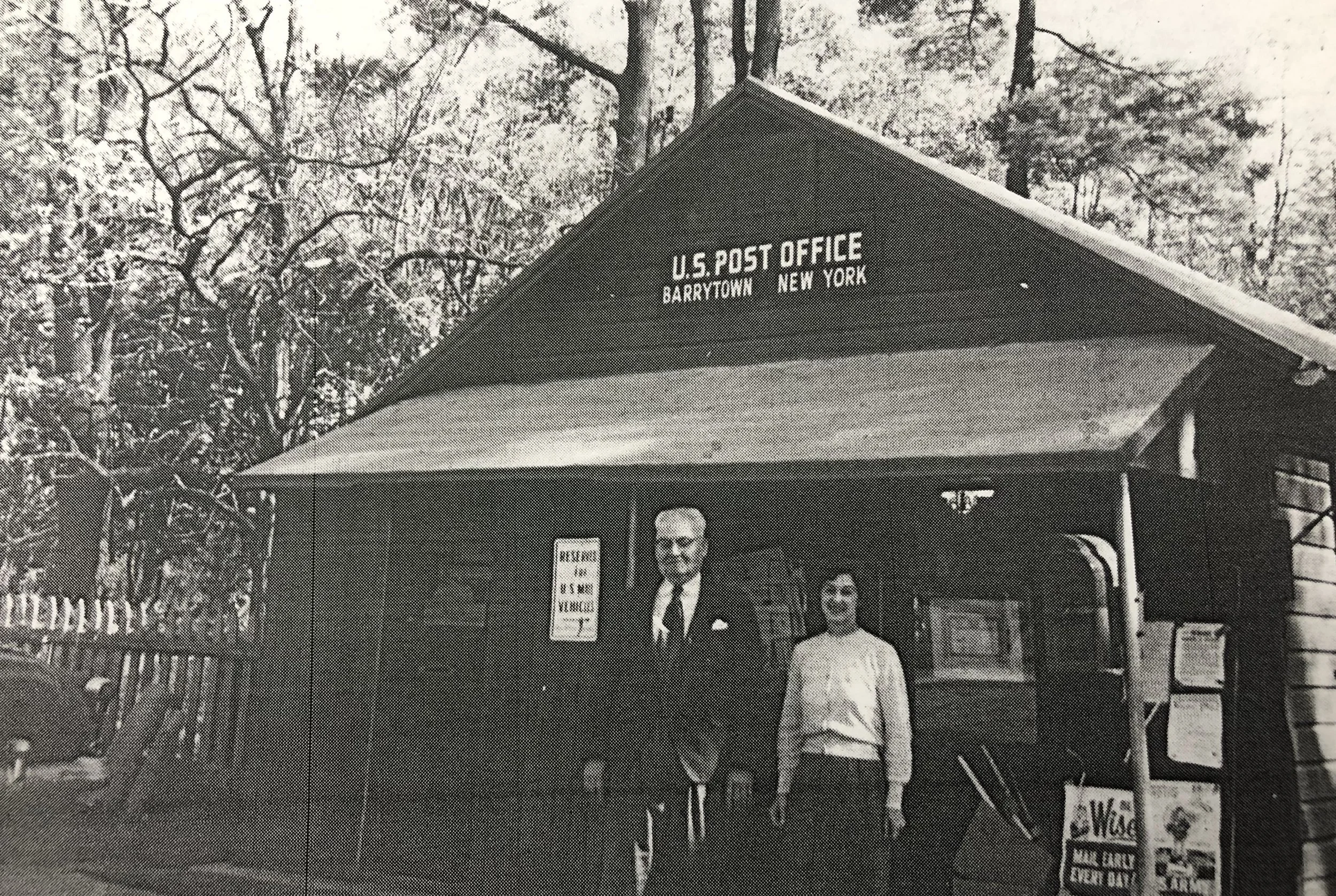
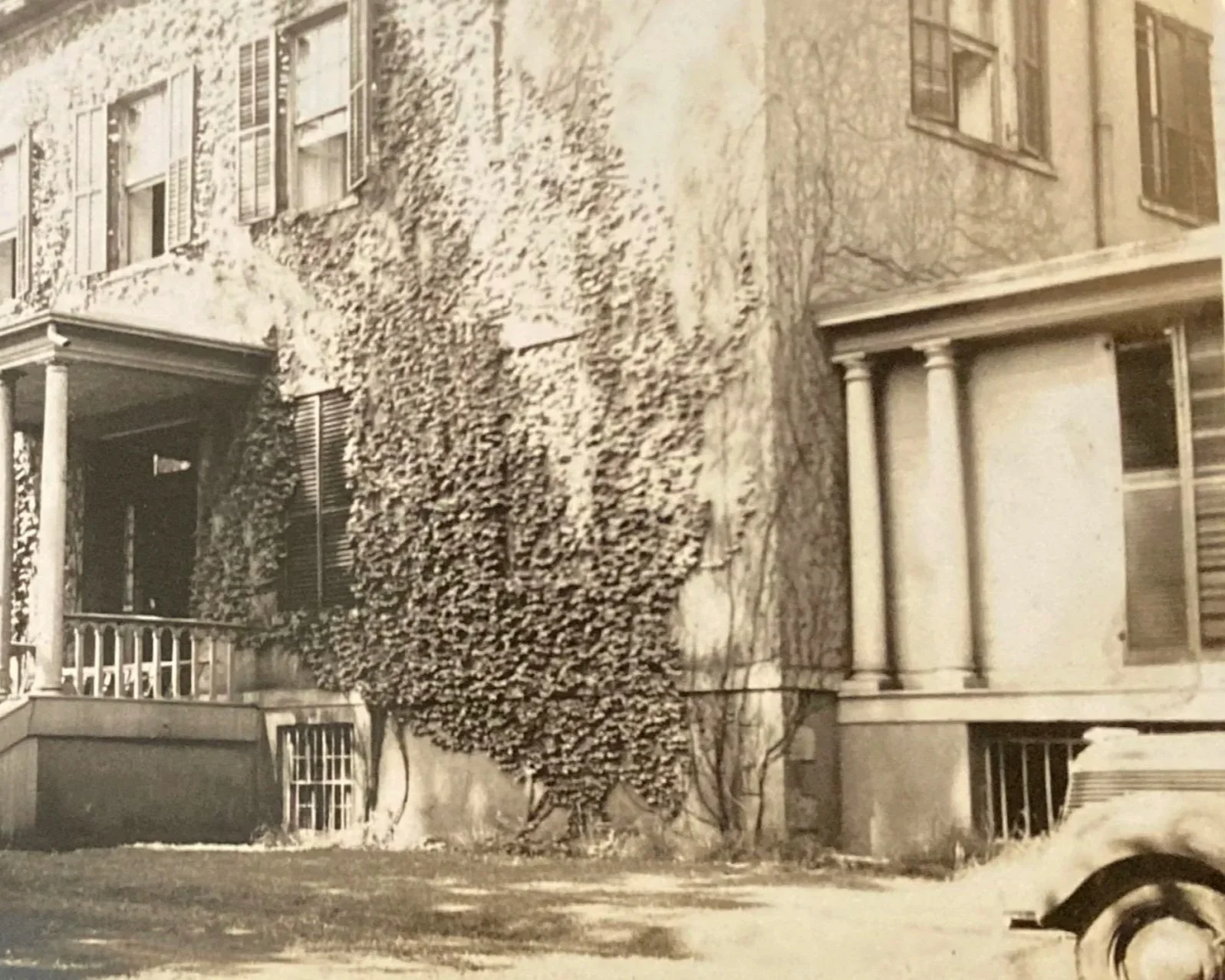
The history of the Barrytown Post Office is the history of the Martin family, postmasters and caretakers alike, whose general store inside the building helped make it part of the rhythm of daily life along this stretch of the Hudson River Valley (at left and center). When Dick Jenrette purchased it in 1969 along with Edgewater, he saved the post office by stabilizing it and adding the distinctive columns you see today, recycled from a 20th century addition (at right) to the A.J. Davis octagonal library.
Nineteenth-century growth in Barrytown followed patterns familiar throughout the mid-Hudson Valley. Residential clusters supported nearby estates and agricultural production, while seasonal industries such as ice harvesting connected the river directly to urban consumption in New York City. Within this economy, the post office occupied an intermediate scale between domestic and institutional life. It operated simultaneously as workplace, meeting point, and information exchange. The act of retrieving mail folded civic participation into daily routine: newspapers collected alongside provisions, letters read against the backdrop of local conversation.
Unlike the masonry federal post offices later constructed in county seats and cities, rural facilities were often embedded within mixed-use structures such as general stores, converted houses, or small commercial blocks adapted to postal service. The nearby O’Brien General Store and Post Office offers a regional analogue: an Italianate building where retail and communication infrastructures coexisted within a single envelope. Barrytown’s post office followed this same logic of adaptation. Its significance derived not from architectural monumentality but from continuity of use—maintained through families like the Martins, whose long tenure exemplified how federal presence in rural America depended on local stewardship.
This architectural modesty was not incidental. Rural post offices functioned at the scale of encounter rather than representation. Where urban post offices expressed federal authority through symmetry and stone, places like Barrytown translated governance into familiarity. The building’s meaning accumulated gradually through repetition—daily arrivals, routine exchanges, and the steady circulation of information that sustained community cohesion.
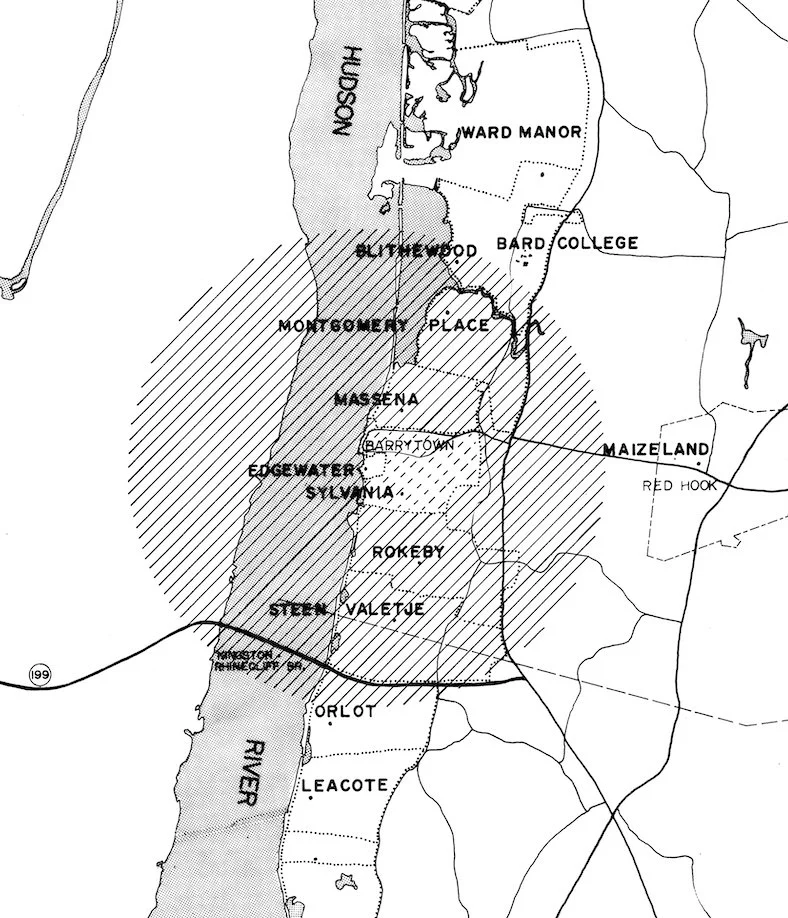
In the 19th and early-20th centuries, rural post offices served as vital civic and social hubs for small communities along the Hudson River Valley, connecting residents to regional markets, national news, and distant family networks. Beyond handling mail, these modest buildings functioned as gathering places where local information was exchanged, commerce was facilitated, and community identity was reinforced. In an era before widespread telecommunications, the rural post office anchored daily life, linking isolated towns to broader economic, political, and cultural currents shaping the United States.
Map c. 1933, courtesy of the Library of Congress, Historic American Buildings Survey (public domain)
Over the 20th century, however, the systems that necessitated such spaces reorganized. River commerce waned, transportation networks consolidated, and administrative efficiency favored centralized distribution facilities. Across New York State, small postal stations closed or merged into regional operations, ending traditions that in Barrytown had endured for generations under local management. Buildings once animated by constant visitation were left behind, their architectural clarity outlasting their programmatic relevance. Many became residences or storage spaces, their former function legible only through subtle spatial traces: a widened doorway, a counter line remembered rather than preserved.
Today, the old Dock Road post office reads as an artifact of infrastructural transition. Its scale mirrors Barrytown itself—neither urban nor entirely rural, suspended between mobility and the stillness for which people flock to the Hudson River Valley. Without the daily choreography of mail exchange, the building’s presence shifts from utility to witness. It marks a period when communication required physical convergence, when distance was negotiated through architecture as much as technology, and when national systems depended on the continuity of local families who embodied them.
The Dock Road post office endures precisely because it was never designed to be exceptional. Its durability lies in its ordinariness: an architecture of service whose afterlife now invites a slower reading of how infrastructure once made community visible. Dick Jenrette purchased it in 1969 along with Edgewater, and stabilized it—even adding columns recycled from a 20th century addition to the A.J. Davis octagonal library—and now it’s time for this building’s next chapter.
The Jenrette Foundation hopes to restore its purpose, not as a post office but as a place of gathering. Over the next 24 months, it will be transformed into a convening spot, educational resource, and symbol of stewardship’s promise—and its purpose—for communities like Barrytown all over the United States.