
The Past Has a Bright Future
An immersive opportunity for four Jenrette Historic Preservation Fellows reveals the intersection of preservation and stewardship in the public and private realms
Author: William Richards, Ph.D.
The inaugural cohort of the Jenrette Historic Preservation Fellows Program met at Millford in August for an intensive, four-day introduction to preservation practice at field sites on the road from Charleston to Columbia. The Jenrette Fellows Program is a two-year graduate fellowship supporting the next generation of leaders in historic preservation. Through scholarship support, hands-on learning opportunities, and a growing national network, the program is designed to strengthen the education and professional development of emerging preservationists across the country.
This first cohort reflects key action areas in the field including architectural history, public history and law, conservation, adaptive reuse, community-centered design, and cultural stewardship. Ava Galbraith entered the University of Oregon this year, having recently completed a master’s in visual, Material, and Museum Anthropology at Oxford University; Kayla Sparks, who just started at the Pratt Institute in New York, graduated summa cum laude from the Savannah College of Art and Design (SCAD); Loring Telleen, a graduate of Washington University in St. Louis and Vanderbilt Law, recently began her studies at the School of the Art Institute of Chicago (SAIC). Abigail Vosen, who majored in Studio Art and minored in Art History at Carleton College, began this month at the University of Pennsylvania.
The Jenrette Foundation education team structured the week as an encounter with preservation’s disciplines and competing priorities, rather than an academic introduction, and Fellows confronted questions of what is worth preserving, conserving, and interpreted. Different stakeholder groups that shape preservation’s practice came to the fore like clients, review boards, and craftspeople, mapped onto the realities of the market, geography, regulation, and the environment.
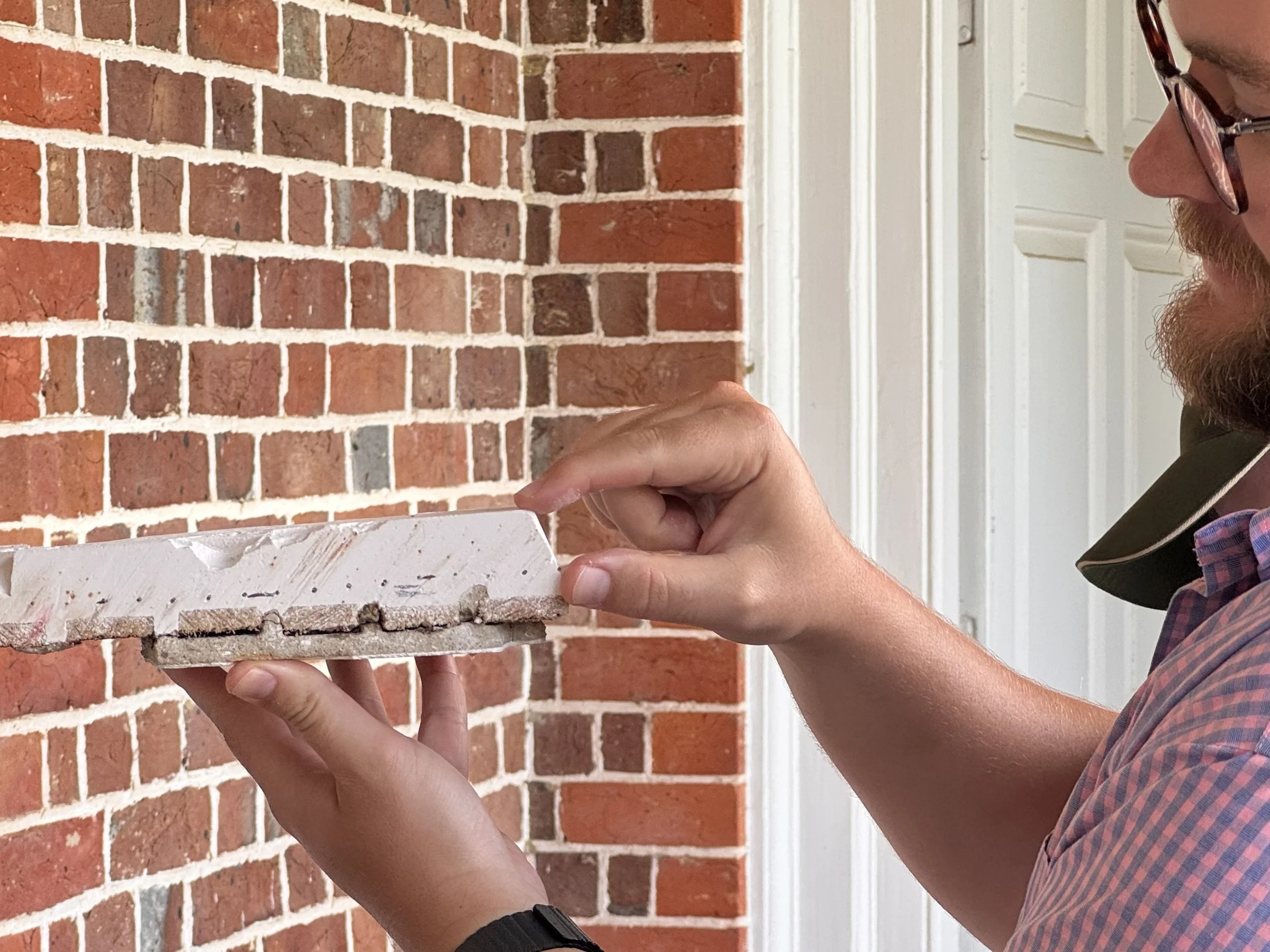
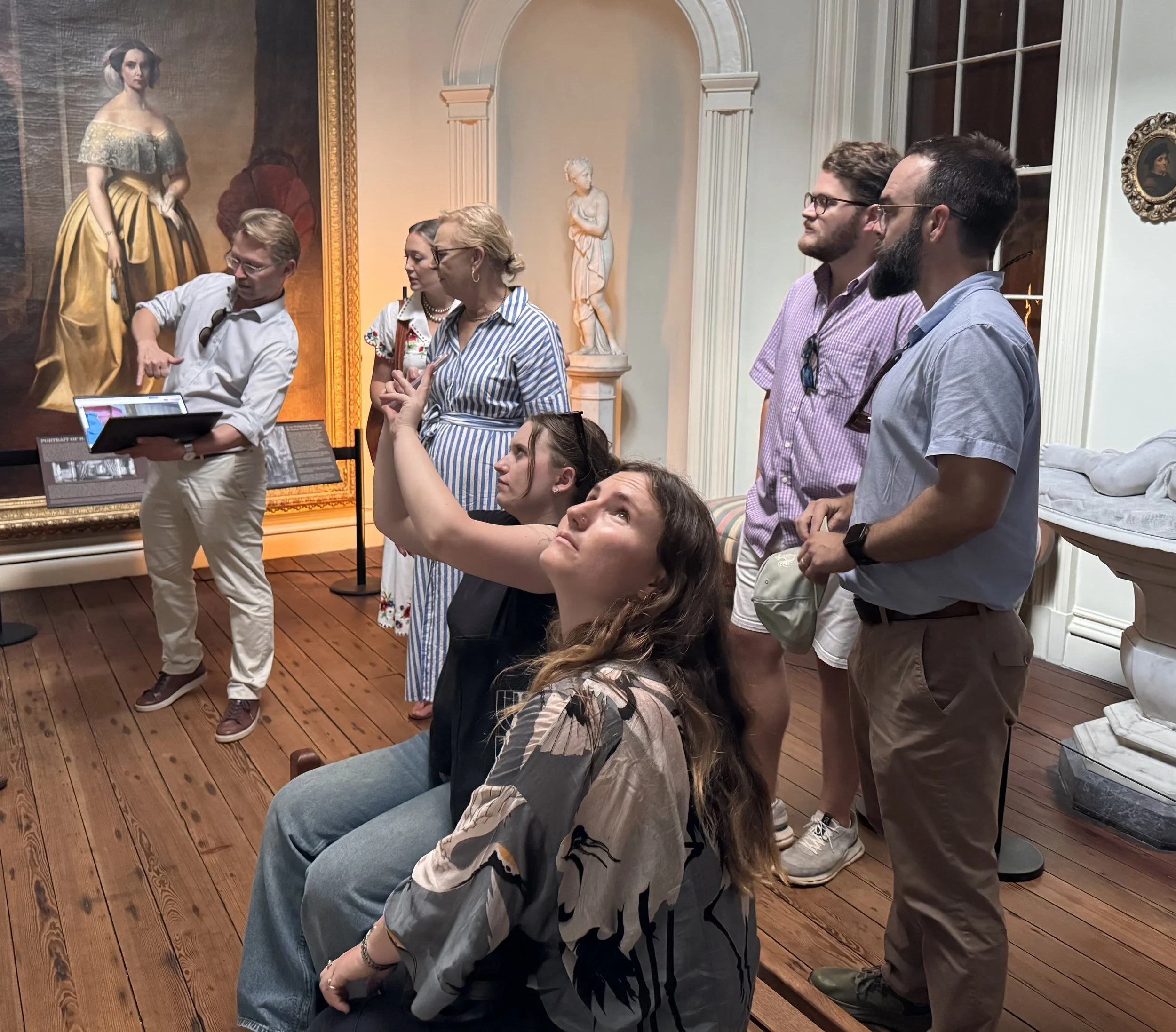
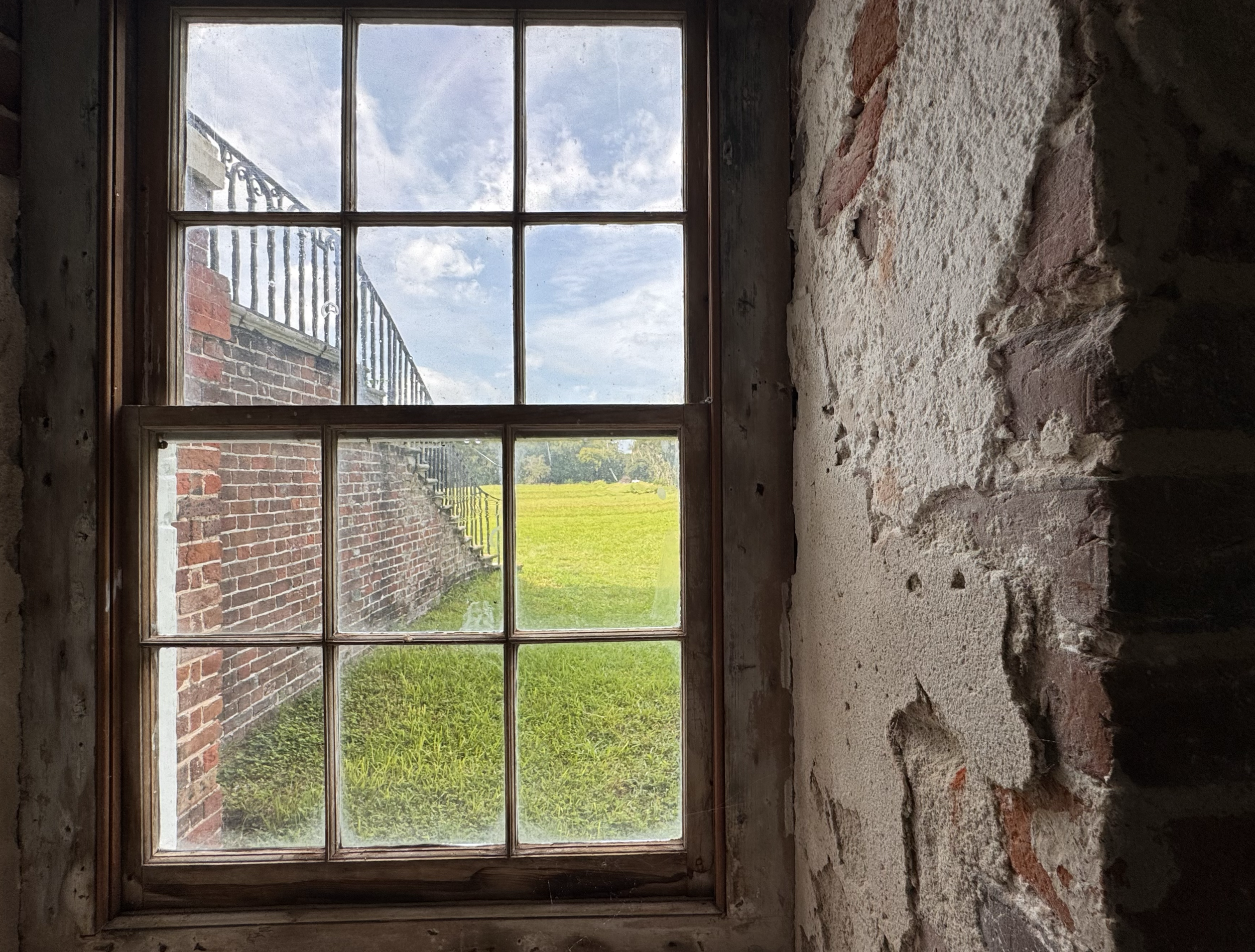
At Drayton Hall, Patricia Lowe Smith, Vice President of Preservation, Archaeology and Collections, led a tour examining the earliest Palladian house in North America, its stabilization project, and its plaster work. Drayton Hall is a largely untouched and exceptional survivor of its era within the pantheon of “gentlemen architects,” certainly, but also as the key to understanding the landscape of slavery in the American South, drawing on material and archeological evidence. The group was joined by Jackson Dent, on fellowship there from Clemson University’s Historic Preservation Program, and a former William L. Thompson Collections Fellow, who helped explain the layers of intervention—quite literally—that must be considered with restoring the plaster ceilings.
The Fellows considered Drayton Hall not simply as historic building open to the public, but as active preservation laboratory where research, education, interpretation, conservation, and community-building intersect. That distinction matters. A house museum preserves more than a structure. It creates an argument about why that structure matters and provides a framework through which visitors can understand it. The decisions made by a house museum—what to preserve, what to interpret, what to leave unfinished, what stories to emphasize—are themselves acts of preservation.
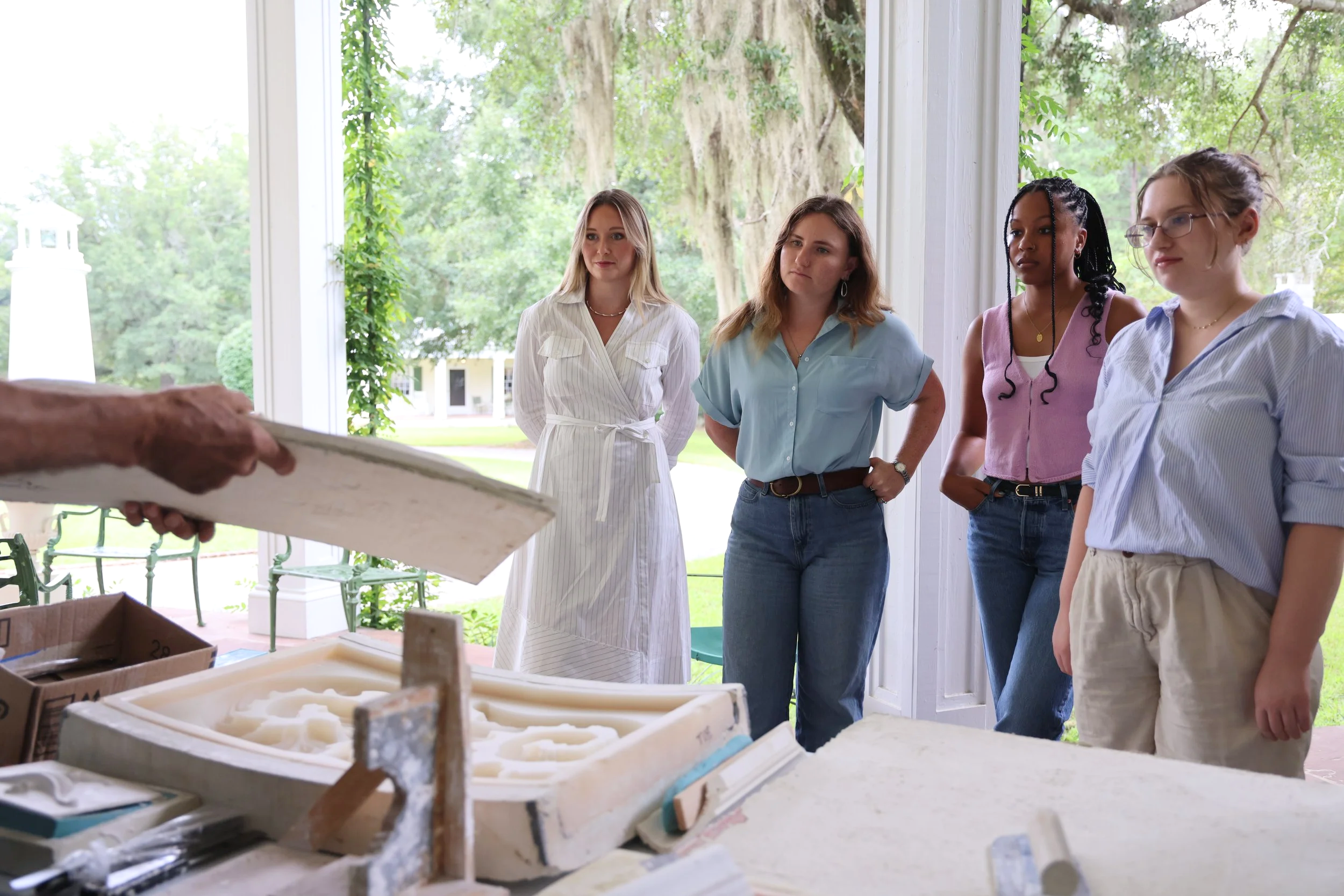
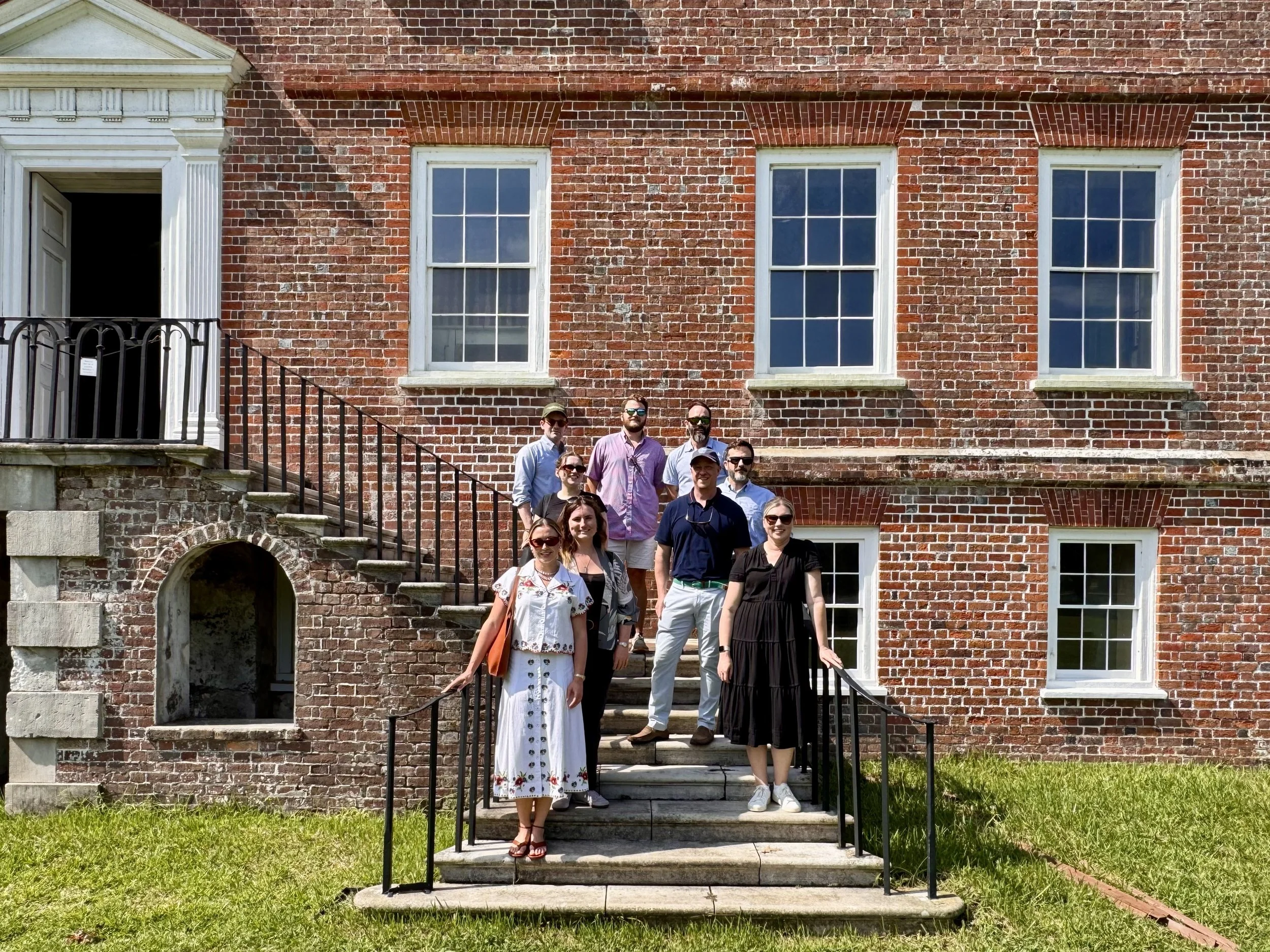
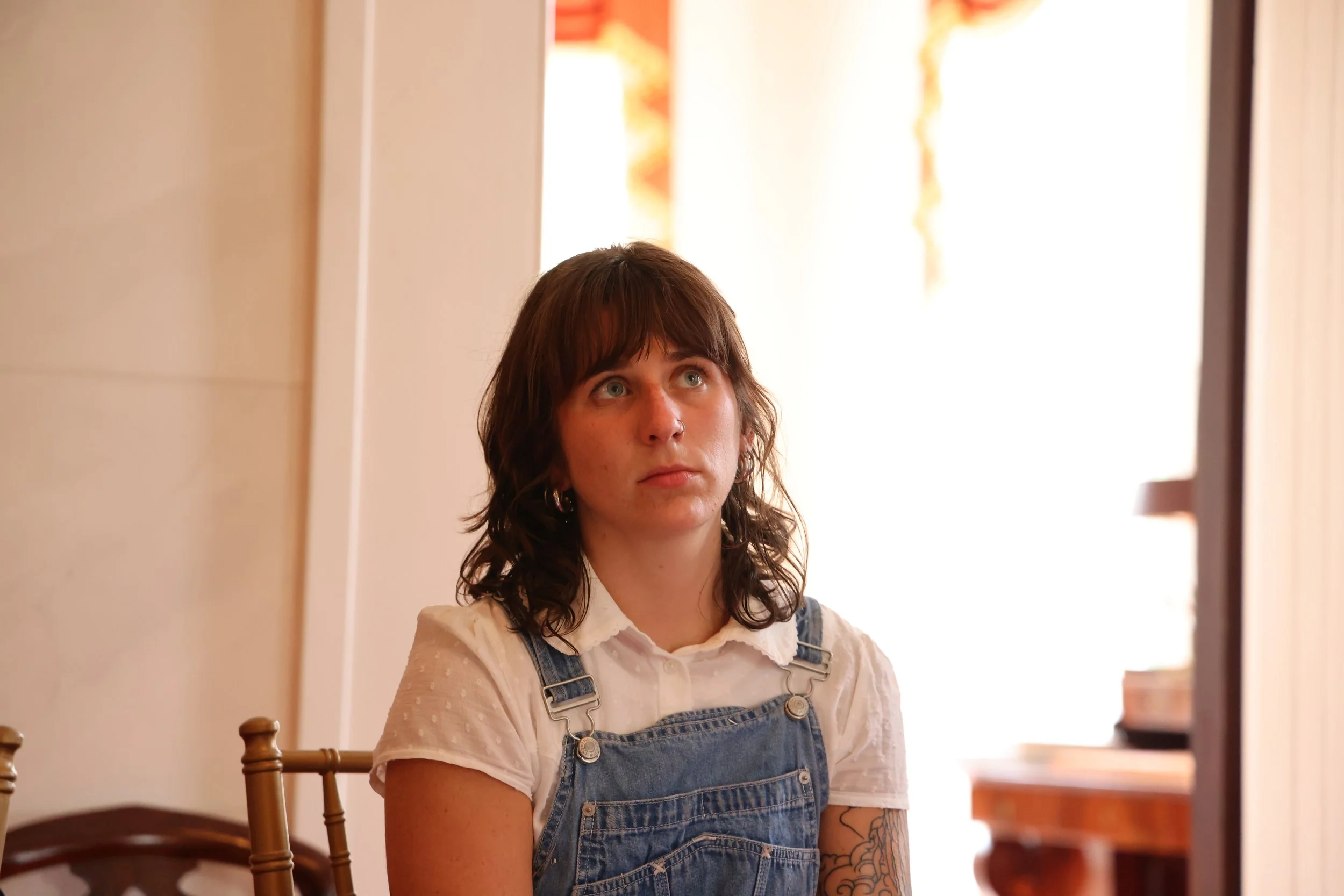
(L-R) Jenrette Foundation Historic Preservation Fellows Loring Telleen, Ava Galbraith, Kayla Sparks, and Abi Vosen spent an intensive week visiting historic sites and meeting preservation practitioners across South Carolina in August.
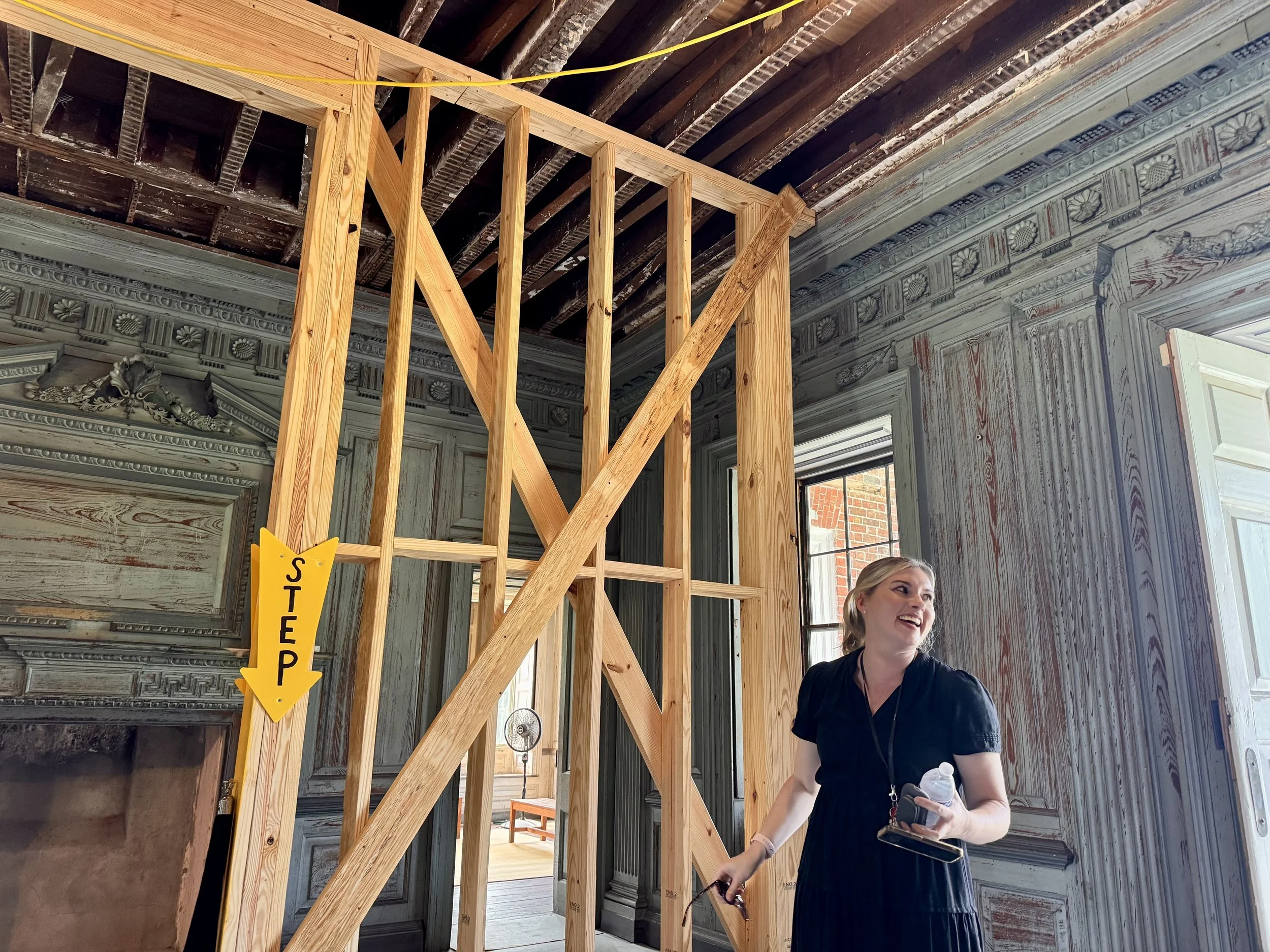
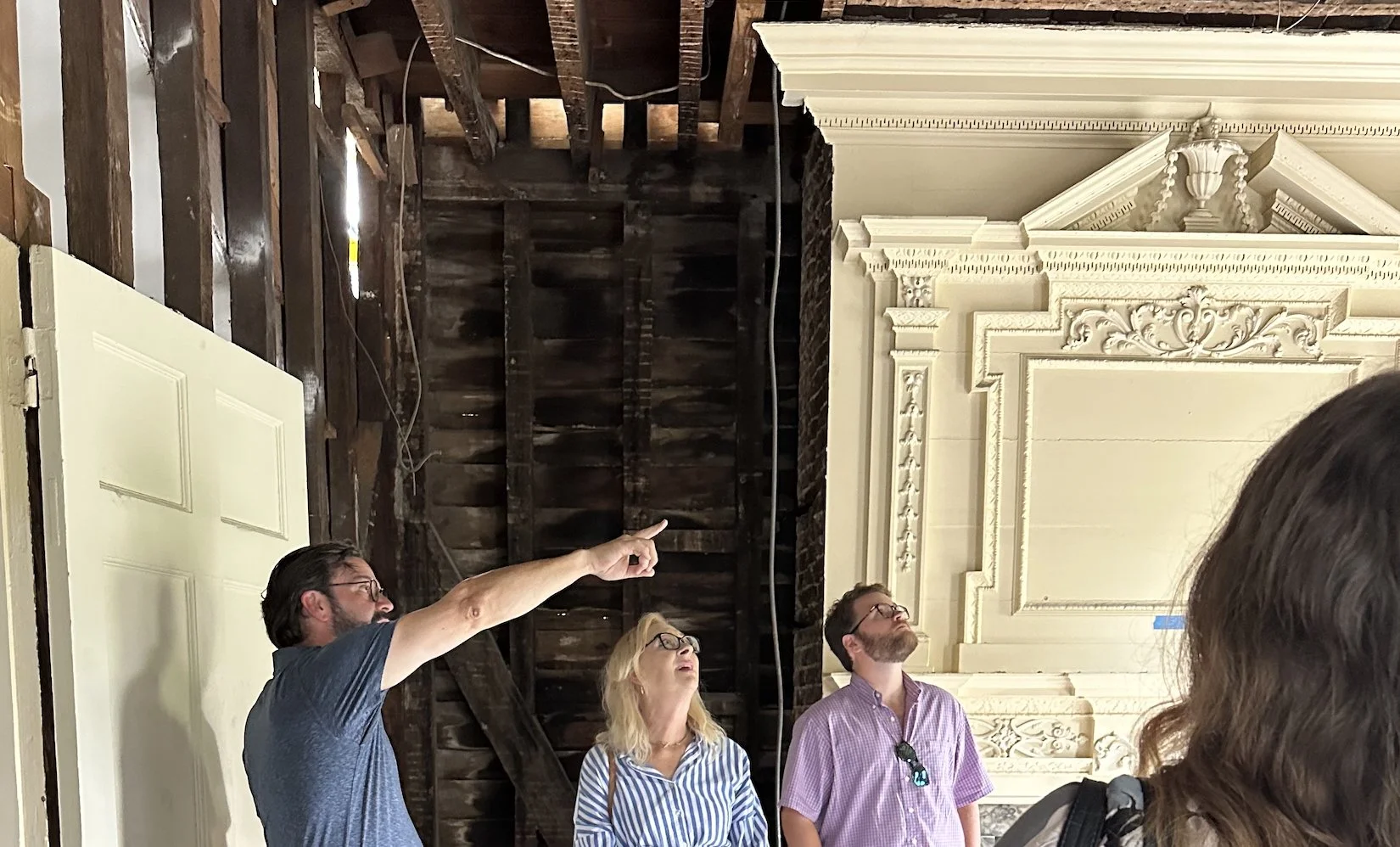
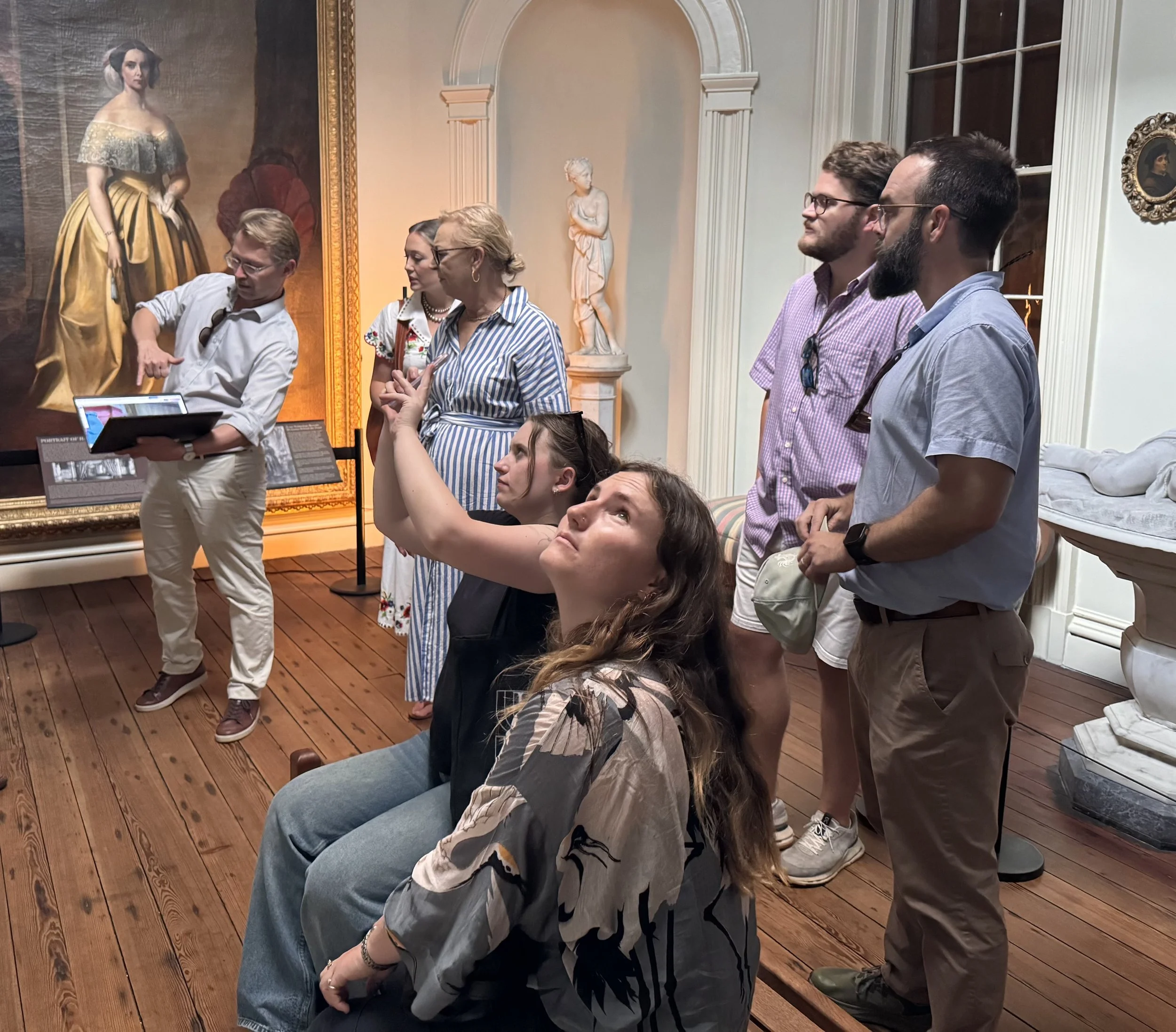
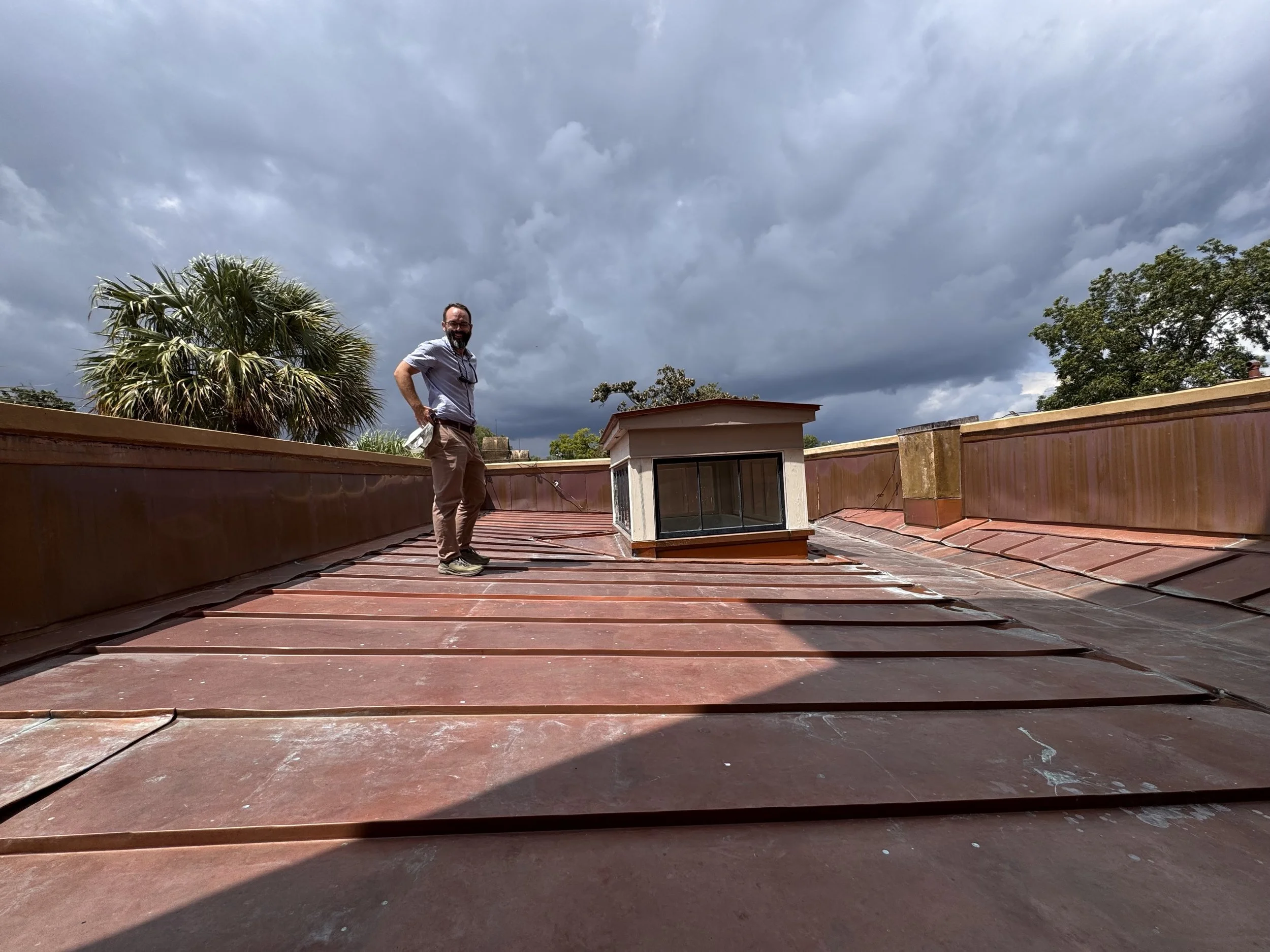
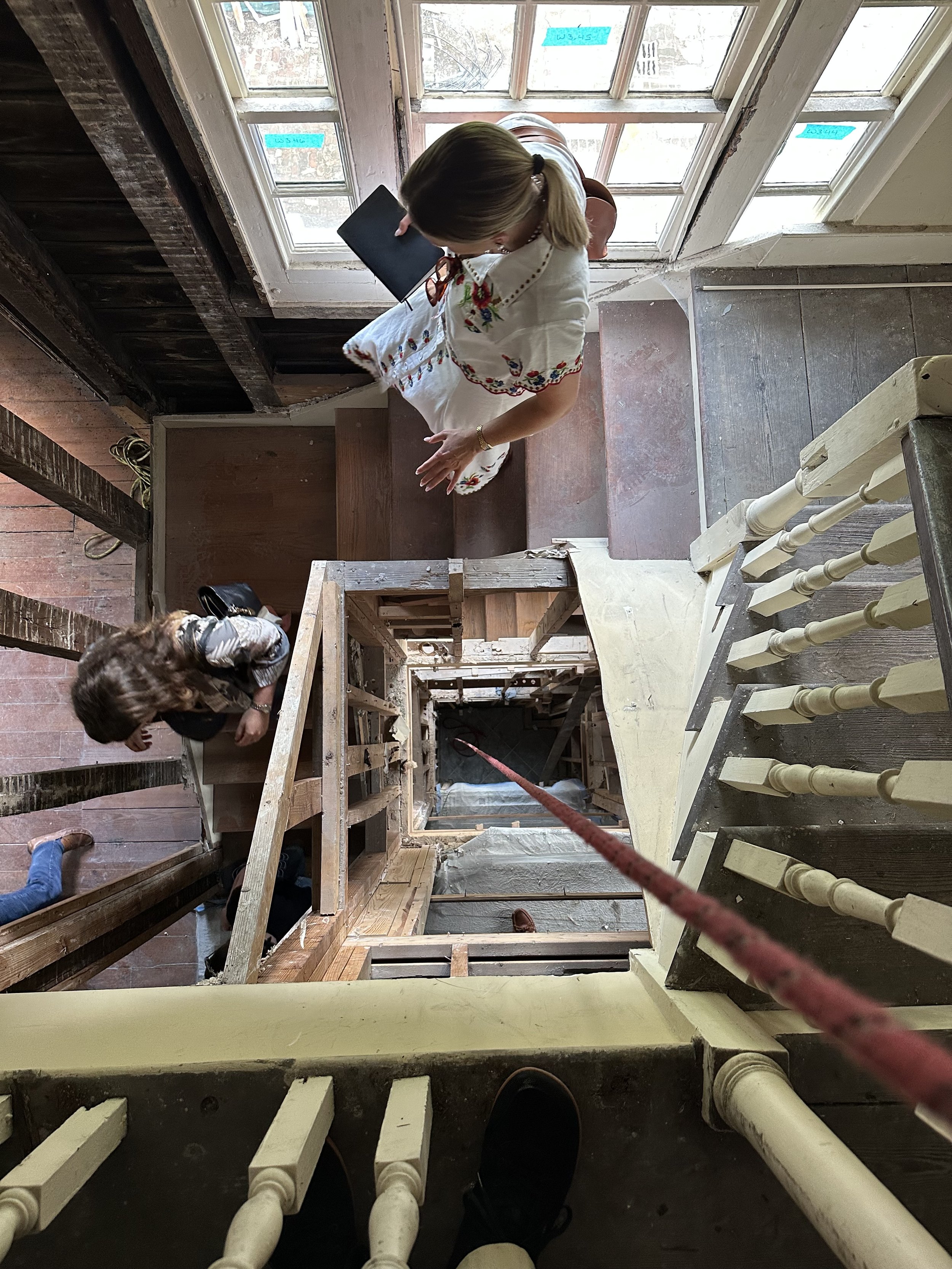
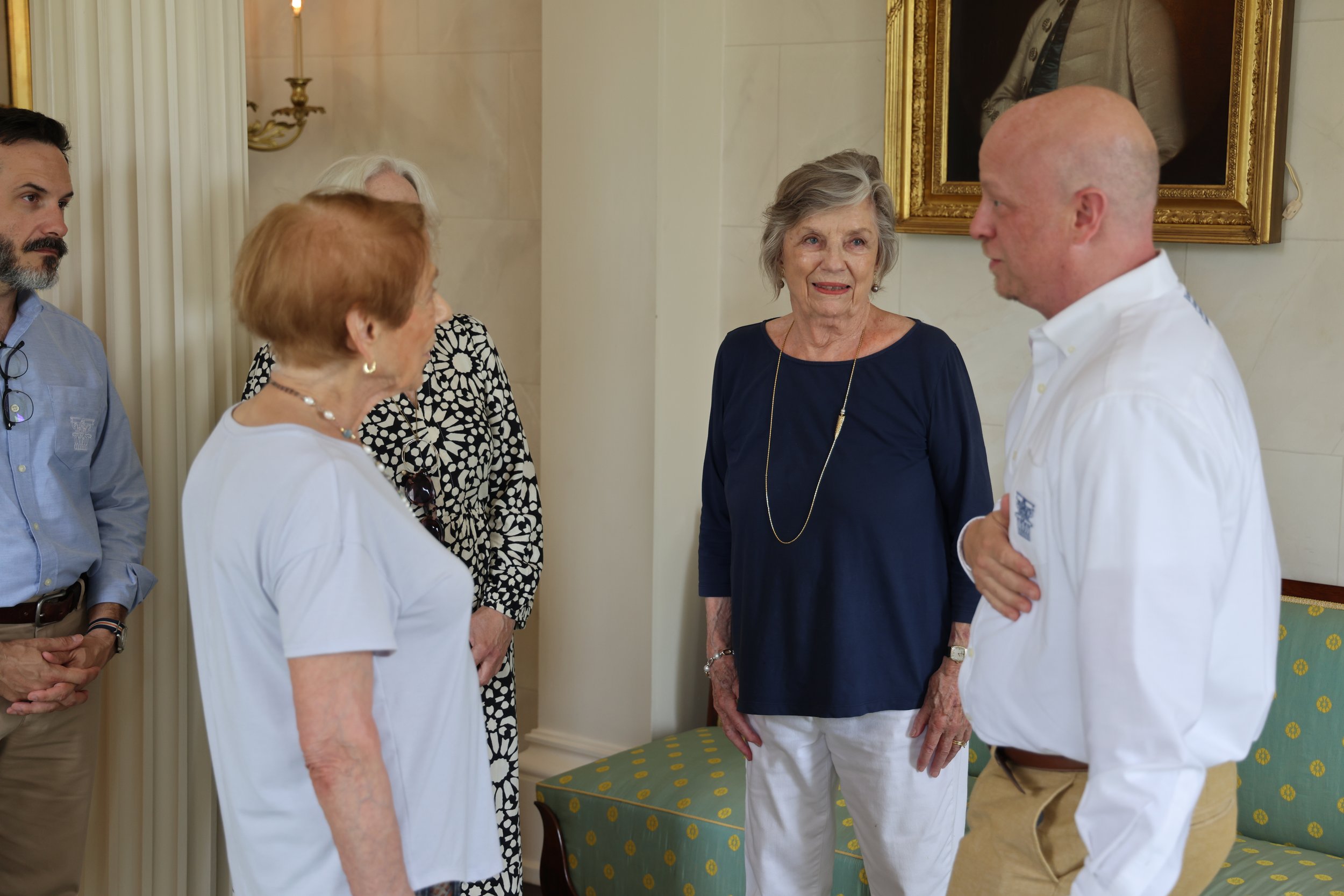
At the Aiken-Rhett House, Historic Charleston Foundation offered another perspective on that role one of the country’s most remarkable examples of “preserved as found” architecture. Historic Charleston Foundation has allowed the layers of history, materials, finishes, alternations, and signs of age to coexist and remain visible—sometimes as a palimpsest and sometimes as a ledger. There the Fellows met with Artis Construction, which completed the restoration of a special gallery that houses its art collection, rebuilding a monitor skylight, roof, and delicate plaster ceiling below. Artis also gave us a special tour of a private residence on Tradd Street dating to the 1760s, learning about how private ownership and stewardship work together to understand and honor the historic fabric while also making it livable to modern standards. Tradd Street offered a useful counterpoint to Aiken-Rhett, but the future of both properties is determined by the same level of skill, craft, and attention.
“I am hoping to continue learning more about the mechanics and the details of how preservation happens,” says Jenrette Fellow Loring Telleen. “Who are the people that make these projects come to life? Being exposed to these trades and these sites has been essential to my potential to be an effective steward. You have to know how buildings are made before you can be an advocate for them.”
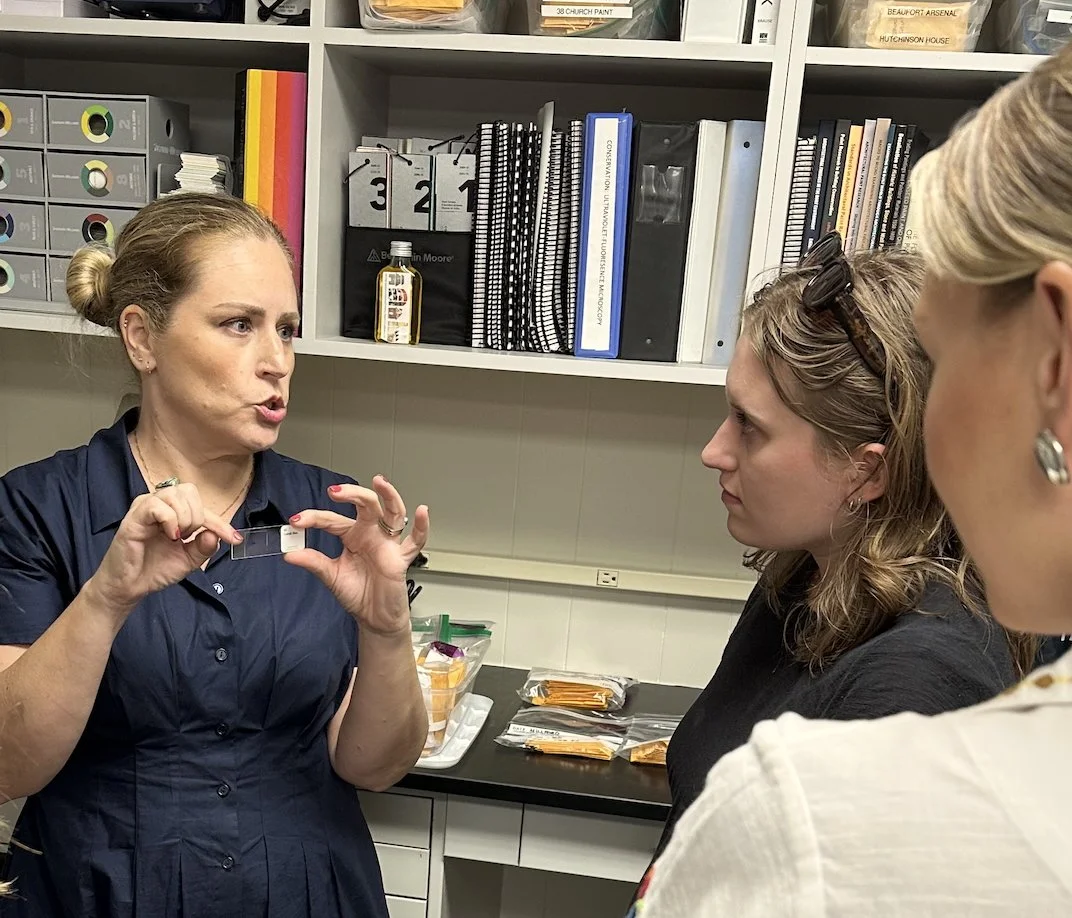
Before a historic building can be appropriately repaired, it must be understood. Materials can reveal construction sequences. Layers of paint can reveal changes in use and taste. Deterioration can point to failures in drainage or environmental control. Physical evidence can challenge assumptions based on drawings, photographs, or written histories. Up the road in North Charleston, the Fellows visited Meadors, home base for a restoration contractor skilled in architecture, forensics and analysis, and fabrication whose office includes a state-of-the-art laboratory to evaluate materials and evidence, guiding a responsible, thoughtful, and creative intervention in the historic fabric.
“I’ve been really interested to learn more about scale—how we scale up our efforts or scale them down to address a site’s needs. Preservation can be surgical in its intervention or much more comprehensive,” says Jenrette Fellow Abigail Vosen, “and I think how ownership works—and a client’s or an owner’s stake in the process—is important, especially when we start to talk about conservation, which has a ripple effect into the memory of the larger community.”
Back at Millford, Jenrette’s Director of Preservation Will Hamilton led a walk-and-talk focused on a less celebrated but foundational maintenance efforts, especially the surrounding landscape, home to nearly two dozen structures whose contribution to Millford’s history remains a vital link between preservation’s study and practice. From Millford, the Fellows traveled to the Lexington County Museum, where J.R. Fennell led an architectural tour centered on vernacular architecture and a deliberately provocative proposition: historic buildings do not need columns to be historic, raising questions about the field’s standard application of what makes a structure “contributing” and what doesn’t in historic and cultural landscapes. For much of the history of preservation in the United States, attention has disproportionately favored monumental architecture, architect-designed buildings, and places associated with prominent people and events. Vernacular buildings complicate that hierarchy. Their significance may reside not in formal distinction but in evidence of everyday life, regional building traditions, material economies, patterns of settlement, or the accumulated history of ordinary people.
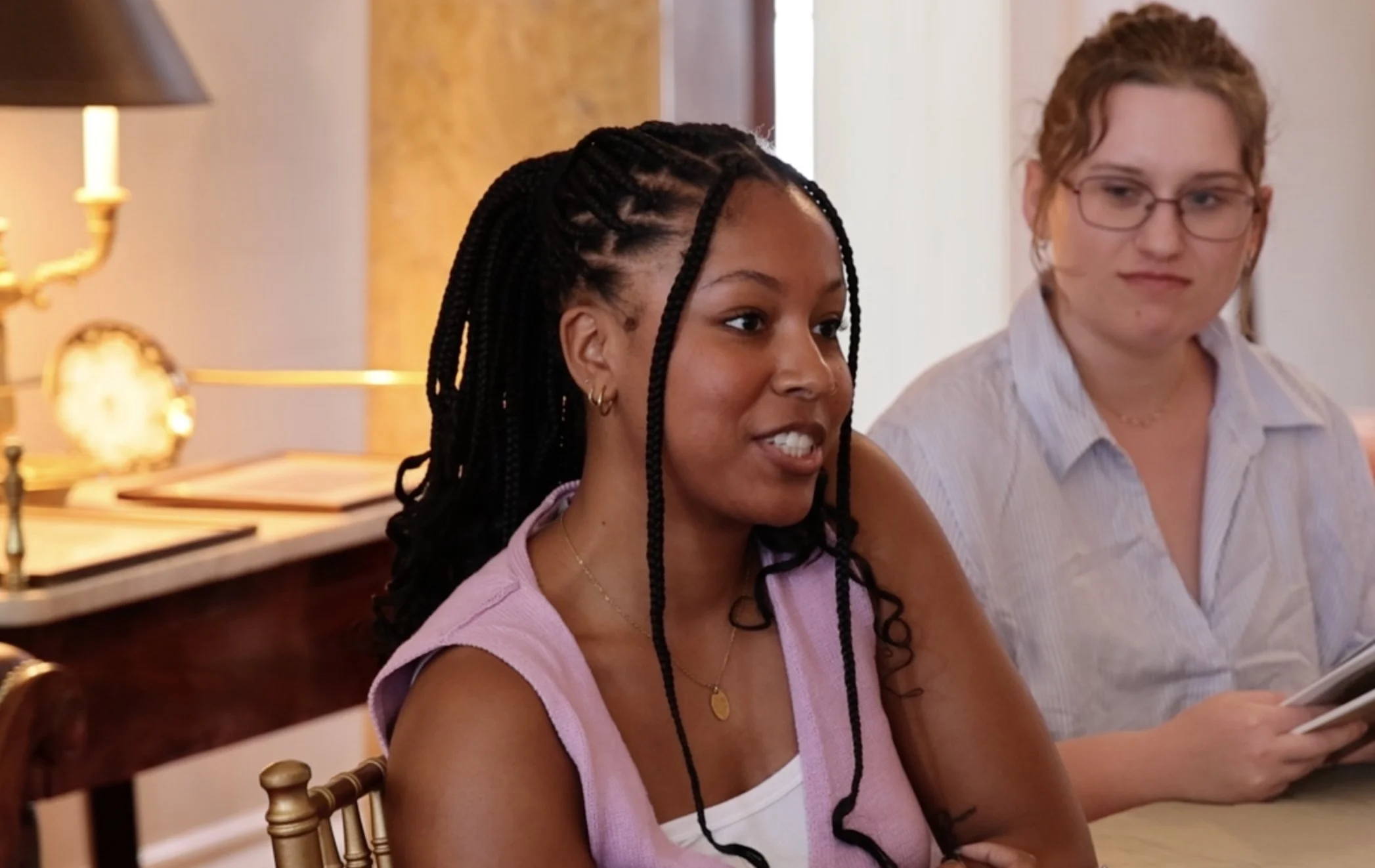
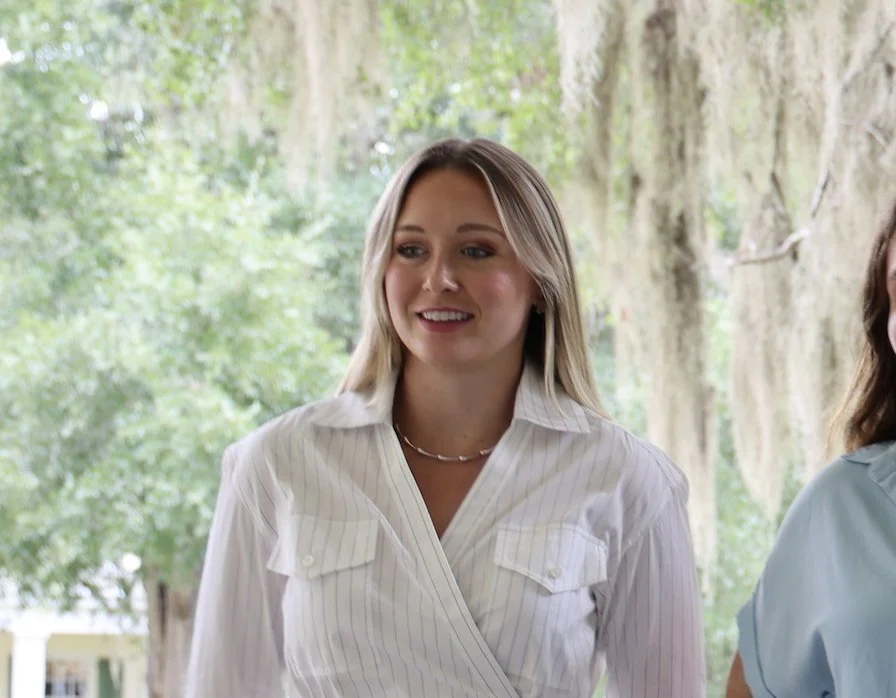
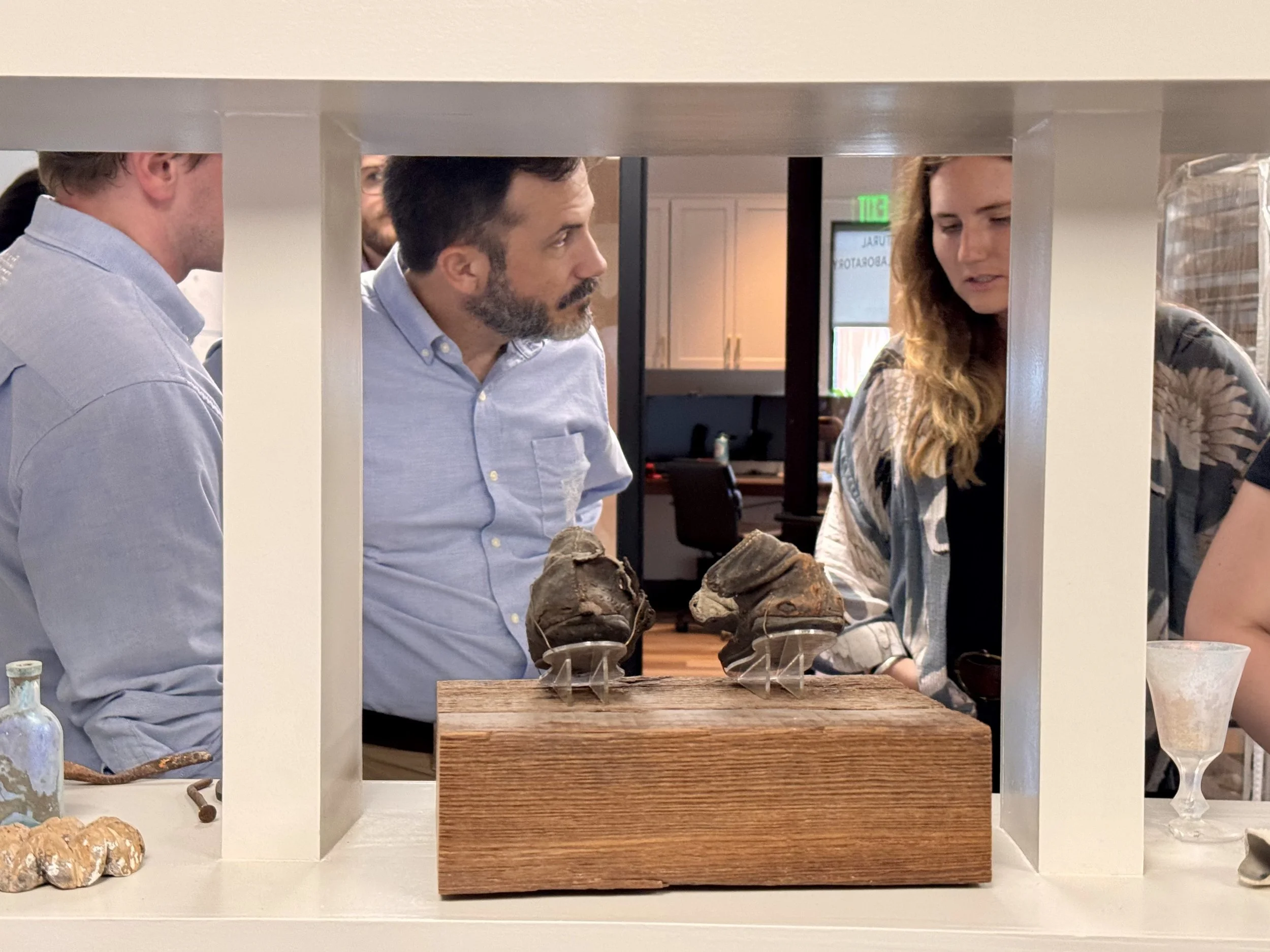
The group followed this narrative thread at the South Carolina’s State Historic Preservation Office (SHPO) in Columbia, examining the role of government in providing guidance, establishing standards, and regulating historic resources. Historic preservation is partly a matter of individual stewardship, but it is also a public enterprise shaped by laws, policies, incentives, designations, and professional standards. It’s a partnership between national, state, and local efforts. South Carolina’s SHPO was established in 1969, and funded by the Historic Preservation Fund, established in 1977, responsible for administering several programs and is associated with the state’s Archives and History Commission, the African American Heritage Commission, and the South Carolina Archives and History Foundation.
“I was impressed with the broad scope of work that preservation comes with. It’s not just the classical SHPO work and 106 work,” says Jenrette Fellow Ava Galbraith, “it’s the process of gutting a house and putting it back together. I’m impressed with the passion, in both the private realm and the public realm, that drives preservation. It’s never, ‘no,’ but rather ‘how can we make something possible.’ I think it always comes back to the public, too—the ultimate client.”
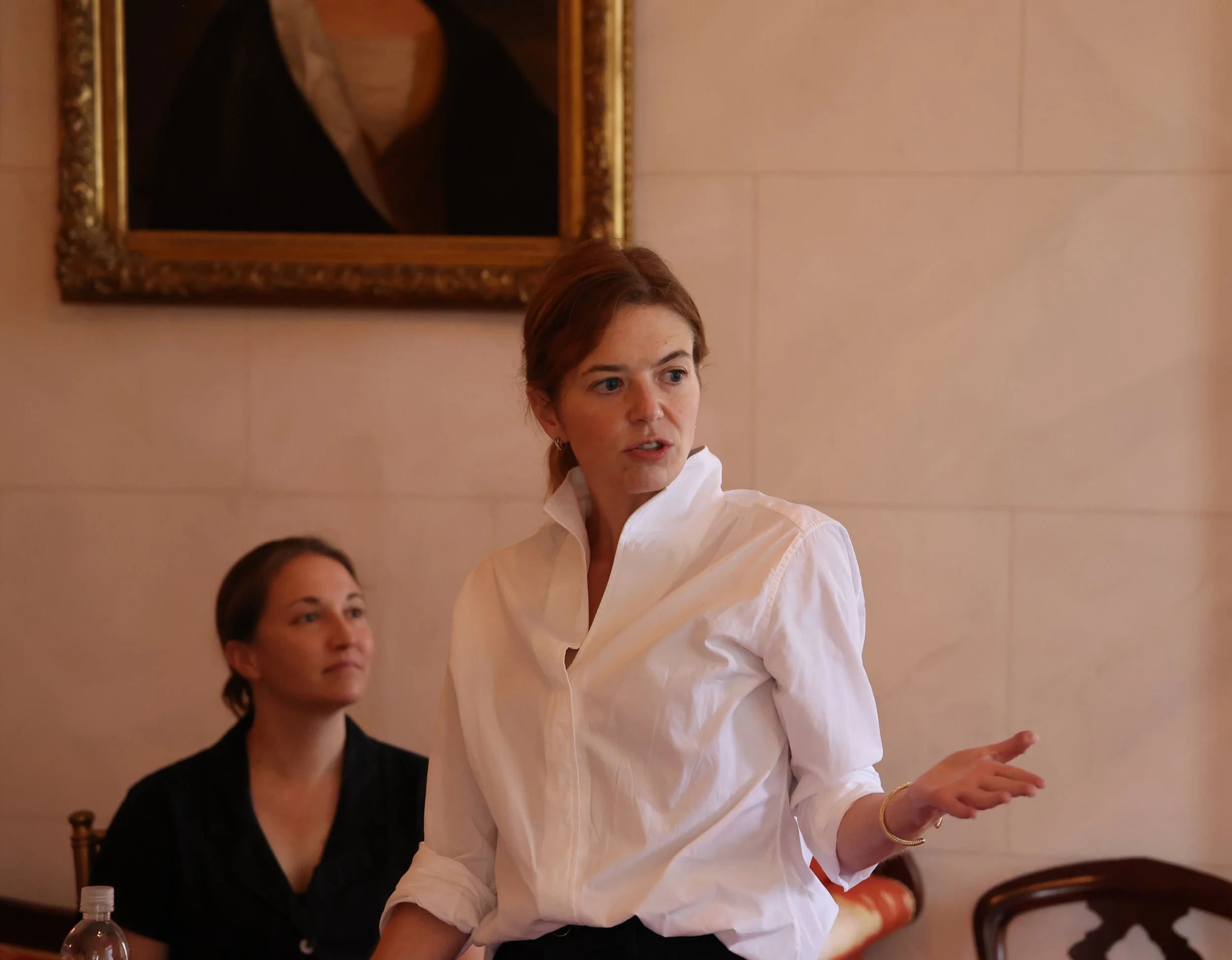
Historic Columbia’s John Sherrer provided yet another perspective, focusing on the role of local preservation organizations—and there could have been no better venue than the c. 1796 Seibels House and Gardens. Advocacy, education, easements, public engagement, and community organizing all occupy a space between private stewardship and government action. (That’s certainly been the case in Columbia, and continues to be an area of opportunity for preservation to evolve in South Carolina, generally.) Preservation ultimately depends upon people willing to make the case for places—and to persuade others that those places matter. It’s no longer simply a question of saving old buildings, Sherrer echoed, but also a question of deciding what we value, how we transmit that value, and what responsibilities follow from it.
Christina Butler from the American College of the Building Arts provided historical context with a short history of preservation in the United States. “We’re a country of progress and we’ve lost a lot of buildings and details even in our short history,” said Butler, “so, when you look at buildings whose sills are gone and whose windows need to be replaced, there’s a little extra importance attached to being a good steward.” Threats, she said, have often been early drivers of the protections that preservation represents, but that the economic and social benefits that protected areas represent today have been drivers of preservation’s evolution.
Joyce Pope from the Historic Charleston Foundation explored the work of local preservation organizations and their vital role. Charleston, which has the largest historic district in the U.S., and the second largest in the world (after Rome) is an ideal laboratory for cooperation amid shifting federal priorities and changes in the local environment. She talked about the 385 easements, binding for 75 years, attached to properties in Charleston. “It means we’re working with the property owner to make sure the property is protected—separate legal agreements that stand apart from local and federal laws,” she said, noting that easements may be placed on both the interiors and exteriors of buildings in Charleston. “There are different benefits to everyone, and for the owner, for instance, there’s a tax advantage if it’s donated—and they know their properties are protected. For Historic Charleston Foundation, it guarantees the highest level of preservation, and for historic preservation generally, it’s an important legal mechanism.”
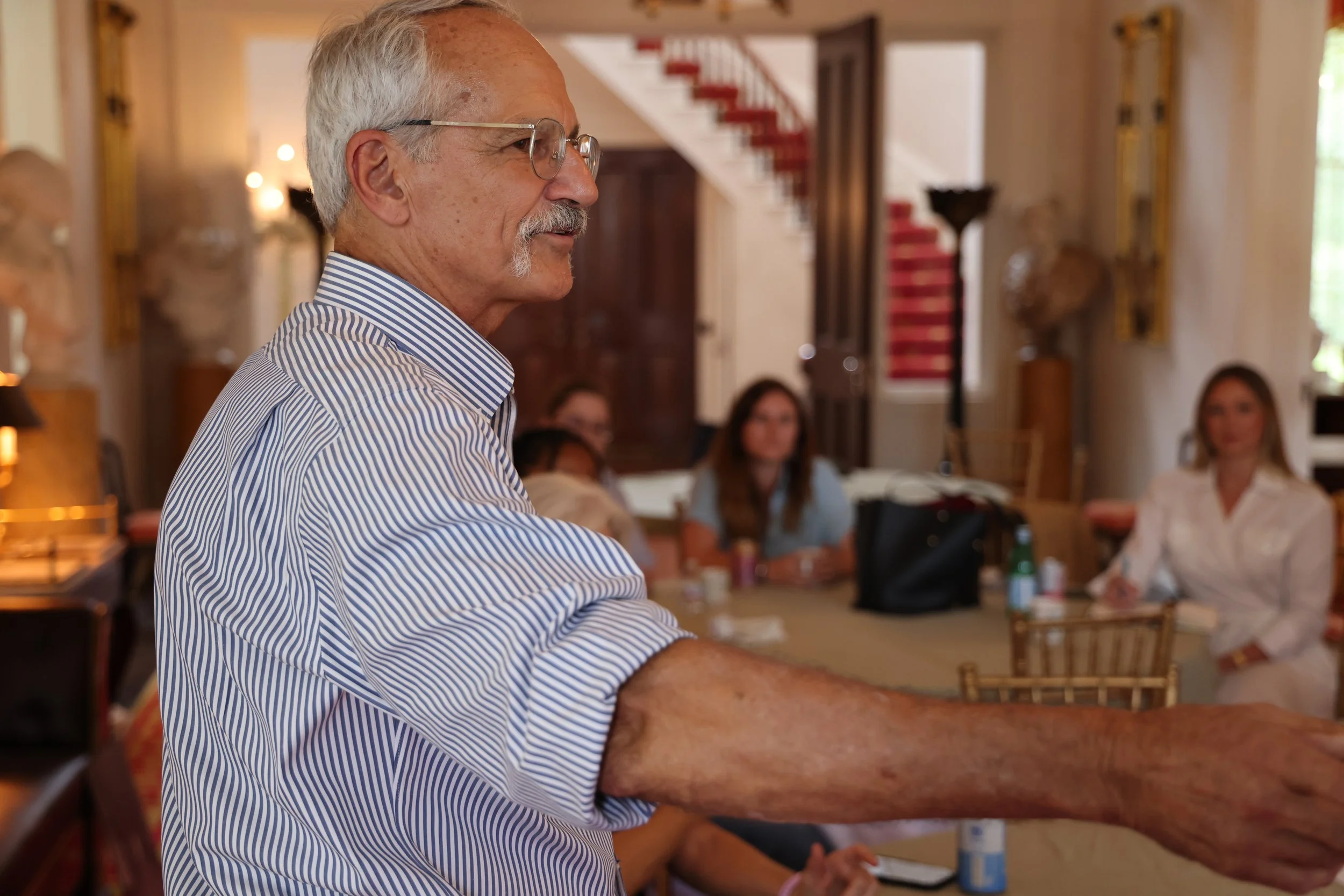
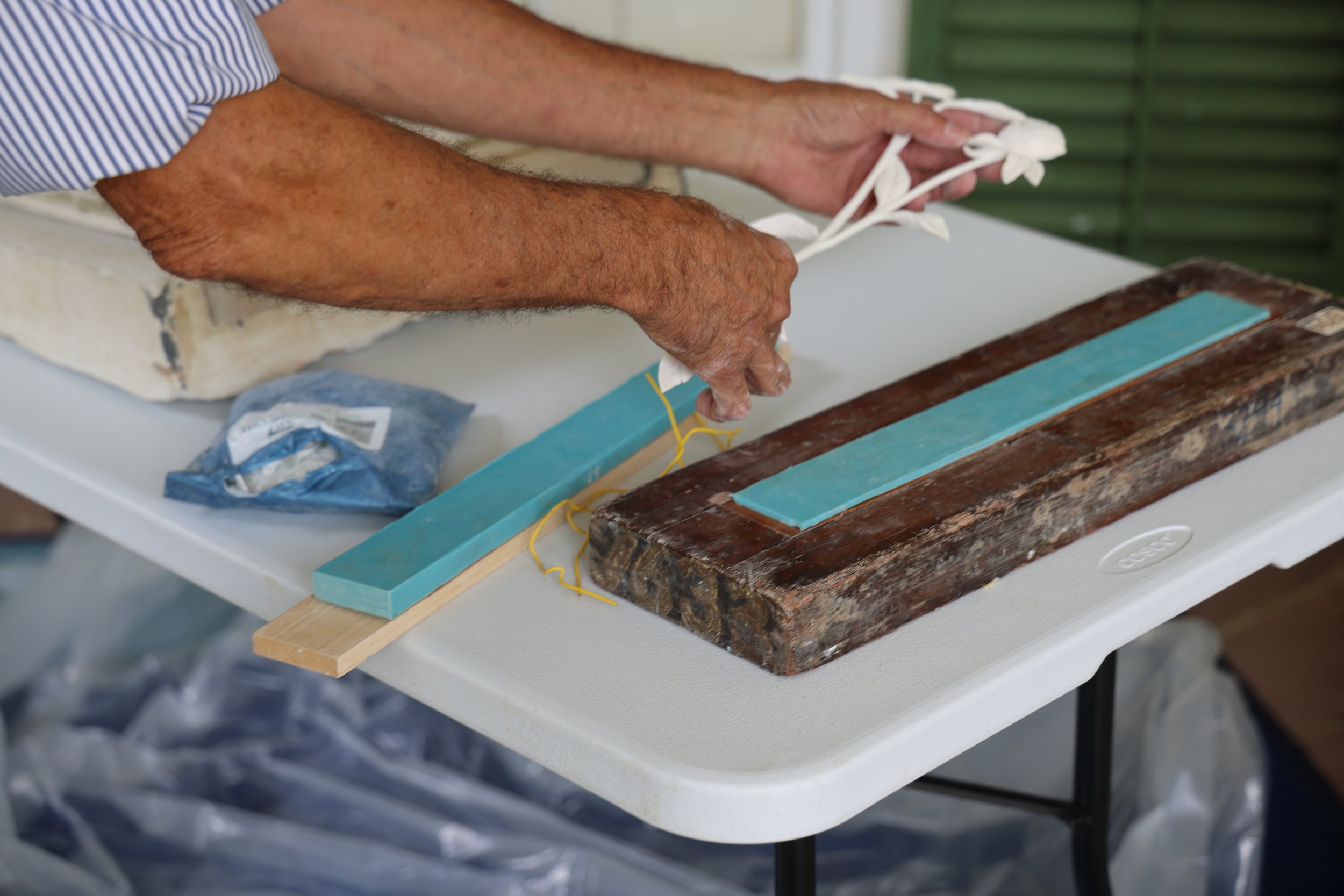
Plaster, masonry, timber, slate, metal, or ornamental woodwork cannot be protected through policy alone, though—they represent generations of knowledge and deeply important trades that have helped shape the United States. Steve Kester, chair of the Plaster Department at the American College of the Building Arts (ACBA), and Grace Majeska, a plaster student in her senior year at ACBA, conducted a plaster demonstration, discussing form, technique, and how humidity and time influence the outcome. Buildings, they explained, embody knowledge about materials and making, and that knowledge can disappear even when the buildings themselves survive. The hands-on demonstration raised fundamental questions about craft’s survival and, if ACBA graduates have anything to say about it, historic trades’ resurgence.
“This is important for me—to acknowledge and learn about architecture’s history and the trades’ history, which you can do in academic settings, but getting the full context by seeing these sites,” said Kayla Sparks, a Jenrette Preservation Fellow. “It’s a window onto the past that you can’t find anywhere else. A lot of this is new to me, so seeing the breadth of sectors and jobs you can do has been important, too. Coming from an advocacy and design standpoint, hearing everyone’s perspective on affordable housing, for instance, or adaptive reuse aligns with my interests very closely. Being immersed in this and hearing from others has been amazing.”
The introductory weekend gave the Fellows no single definition of the field. Instead, it gave them something potentially more useful: a series of experiences that complicate the definition. A house museum. A private construction site. A forensic laboratory. A leaking roof. Vernacular building and high-style architecture. A government office. A local advocacy organization. A plaster trowel. Stewardship is an interdisciplinary culture and a practice full of opportunity to ensure the past has a bright future.
“These Fellows considered why historic preservation should be practiced in the first place at a time when communities are asking whose histories are represented and whose are overlooked,” said Jenrette Foundation President Benjamin Prosky, “and they’re doing it at a time when the historic building trades are seeing a resurgence. The timing is right for them, and they are poised to make a difference for historic preservation.”